4 min read
How to Run a Lot Yield Analysis Before You Call the Engineer
TraceAir Technologies Inc. September 3, 2026
A parcel checks most of the boxes. Location works. The product type looks plausible. The next question is the one that determines whether the deal goes any further: does it pencil?
Getting a reliable answer often means sending the parcel to engineering and waiting for a preliminary layout. In a competitive land market, that creates a timing problem. The seller may be moving faster than the feasibility process.
Land acquisition teams need an earlier filter: enough information to decide which parcels deserve engineering before commissioning it.
What a Pre-Engineering Lot Yield Screen Actually Needs to Answer
A pre-engineering yield screen is a pass/fail test for whether a parcel deserves more time and money.
It needs to answer five questions:
- Can the site realistically support enough lots to meet return thresholds?
- Which constraints immediately reduce usable area or yield, including wetlands, floodplain, and slope?
- Do zoning and product type align with the team's target absorption strategy?
- At the expected unit pricing, does the project reach the required IRR?
- Do the numbers justify moving the parcel into engineering?
That last question depends on more than getting a preliminary lot count.
Land teams often underwrite backwards from unit price to expected revenue and then to allowable land cost. Yield determines whether that math holds. But yield also changes when the assumptions change.
A detached layout may produce one answer. A different lot width, product mix, or road configuration may produce another. Layout Generator is designed to let land teams work through those early site assumptions before moving a parcel deeper into engineering.
What the Current Process Actually Costs
Deal Velocity Loss
When every promising parcel has to enter an engineering queue before the acquisition team can evaluate yield, the schedule starts working against the deal.
Sellers do not necessarily wait for a full feasibility cycle. A team may still be waiting on a preliminary layout while another buyer has already decided whether the parcel works.
The issue is not simply how fast a layout can be produced. It is whether acquisition can reach a defensible first decision quickly enough to stay in the conversation.
Wasted Engineering Spend
The same process can send engineering dollars toward parcels that never progress.
For teams reviewing 15 to 20 opportunities in a month, preliminary layouts can become an expensive screening mechanism rather than a confirmation step.
“We were spending $3–5K per layout just to get an early read on parcels we often didn't pursue.”
— VP of Land, National Homebuilder
The better use of that spend is on parcels that have already cleared an initial yield and underwriting screen.
Decision Distortion
The alternative is often an informal yield assumption based on acreage, zoning, comparable projects, or a rough sketch.
That may be enough to form a hypothesis, but it does not show how the parcel behaves once real constraints and development assumptions are applied.
A weak estimate can cut both ways. A team can pay too much for a parcel whose usable yield is lower than expected, or reject a site that works under a different configuration.
What Faster Actually Looks Like
The purpose of early lot yield analysis is to determine when a parcel is ready for engineering.
A pre-engineering workflow can look like this:
- Select the parcel.
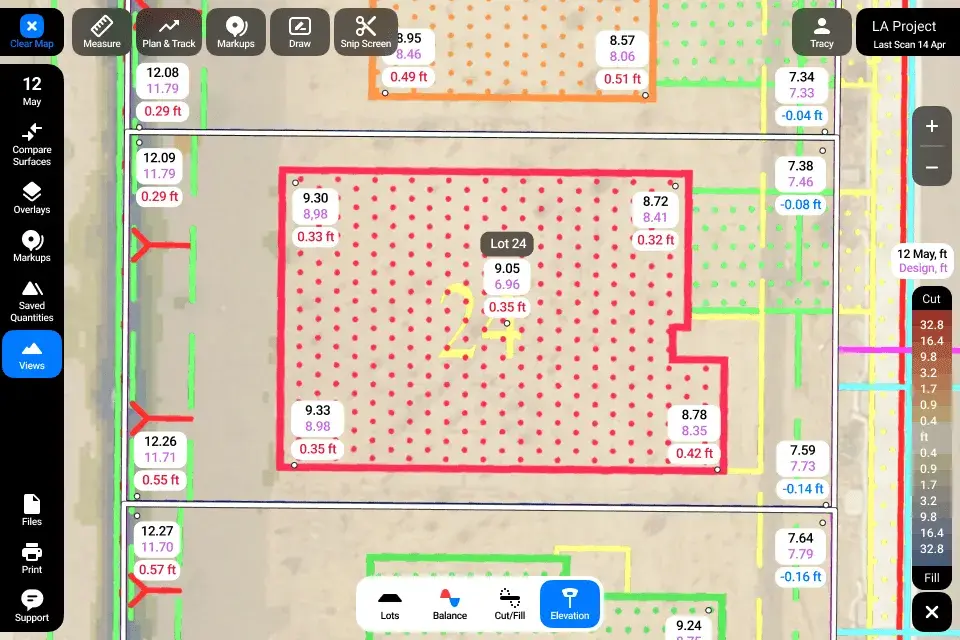
- Apply known constraints such as flood zones, slope, wetlands, and zoning overlays.
- Sketch a preliminary road network.
- Generate different yield scenarios using alternative lot mixes and product types.
- Compare the resulting unit counts with revenue thresholds and allowable land cost.
- Decide whether to pursue the current concept, revise the assumptions, or drop the deal.
The important step is number four.
A faster version of the traditional process would simply return one preliminary layout sooner. Scenario testing lets the acquisition team ask a more useful question: how sensitive is this deal to the development assumptions?
Suppose the initial detached layout is close to the team's yield threshold. What happens if the back third shifts to a townhome mix? Does the additional yield justify pursuing a zoning change? What happens if the road configuration changes? Does one product assumption make the land basis work while another does not?
That is where the ability to work with multiple lot types and different site configurations matters. Those questions can be explored before the parcel enters engineering.
“Being able to do this in-house the same day we find a parcel has allowed us to stay competitive.”
— Land Acquisition Manager, Regional Homebuilder
Engineering still has a critical role. But by the time the engineer receives the parcel, the acquisition team has already tested the basic development assumptions and decided that the opportunity deserves a closer look.
For teams evaluating parcels earlier in the process, TraceAir also supports a broader land acquisition workflow for understanding site conditions before development begins.
Try Layout Generator
Layout Generator is built for land acquisition teams evaluating a specific parcel and trying to answer one early question: is this deal worth engineering?
Teams can apply flood, slope, and zoning constraints, build preliminary layouts, and compare multiple development scenarios without opening CAD or waiting for an engineering slot.
That means engineering can focus on deals that have already passed an initial acquisition screen.
If a parcel is on the table, test the assumptions that determine whether it works before committing to the next step.
Frequently Asked Questions
What is a lot yield analysis?
It's an early check on how many lots a parcel can realistically support once basic constraints and zoning are factored . Done before paying for a full engineering layout.
Why not just send every promising parcel straight to engineering?
Preliminary layouts cost real time and money, often $3-5K per site, and in a competitive land market, waiting on that turnaround can mean losing the deal to a faster buyer. A pre-engineering screen filters out parcels that won't pencil before you spend on either.
What five questions does a pre-engineering yield screen need to answer?
Can the site support enough lots to hit return thresholds? Which constraints (wetlands, floodplain, slope) cut into usable area? Does zoning fit the target product type? Does the math clear the required IRR at expected pricing? And do the numbers justify moving the parcel into engineering?
What's the risk of skipping this step and relying on a rough acreage-based estimate instead?
An informal estimate doesn't account for how a parcel actually behaves under real constraints and layout assumptions. That can cut both ways —overpaying for a site with lower usable yield than expected, or walking away from one that would work under a different configuration.
How does Layout Generator support this process?
It lets acquisition teams apply known constraints, sketch a preliminary road network, and test multiple lot mixes and product types on a specific parcel, so they can compare yield scenarios against revenue thresholds the same day they find the site, without opening CAD or waiting for an engineering slot.
Does this replace the civil engineer?
No. It's meant to screen parcels before they reach engineering, so by the time an engineer takes on the site, the acquisition team has already tested the basic assumptions and confirmed the deal is worth a closer look.