3 min read
Lot Shortage in the US: How TraceAir Accelerates Land Acquisition
Despite an increase of 77% from last year, the number of lots available for residential building in the US remains “significantly undersupplied”,...
Platform
Main Solutions
3 min read
TraceAir Technologies Inc. Updated on January 29, 2026
It has been established that using drones on construction sites is beneficial for project management due to the quality of data provided and relative low cost compared to other surveying methods. Click here to learn why. But getting started can be challenging, and companies are faced with an important question: is it better to initialize and manage a drone program in-house or outsource to a turnkey third party solution?
Let's compare the time and cost of managing drones, processing, and data sharing in-house with the commitment of using a third party. To keep it simple, let's use a fictional 75-acre development spanning 36 weeks as our example.
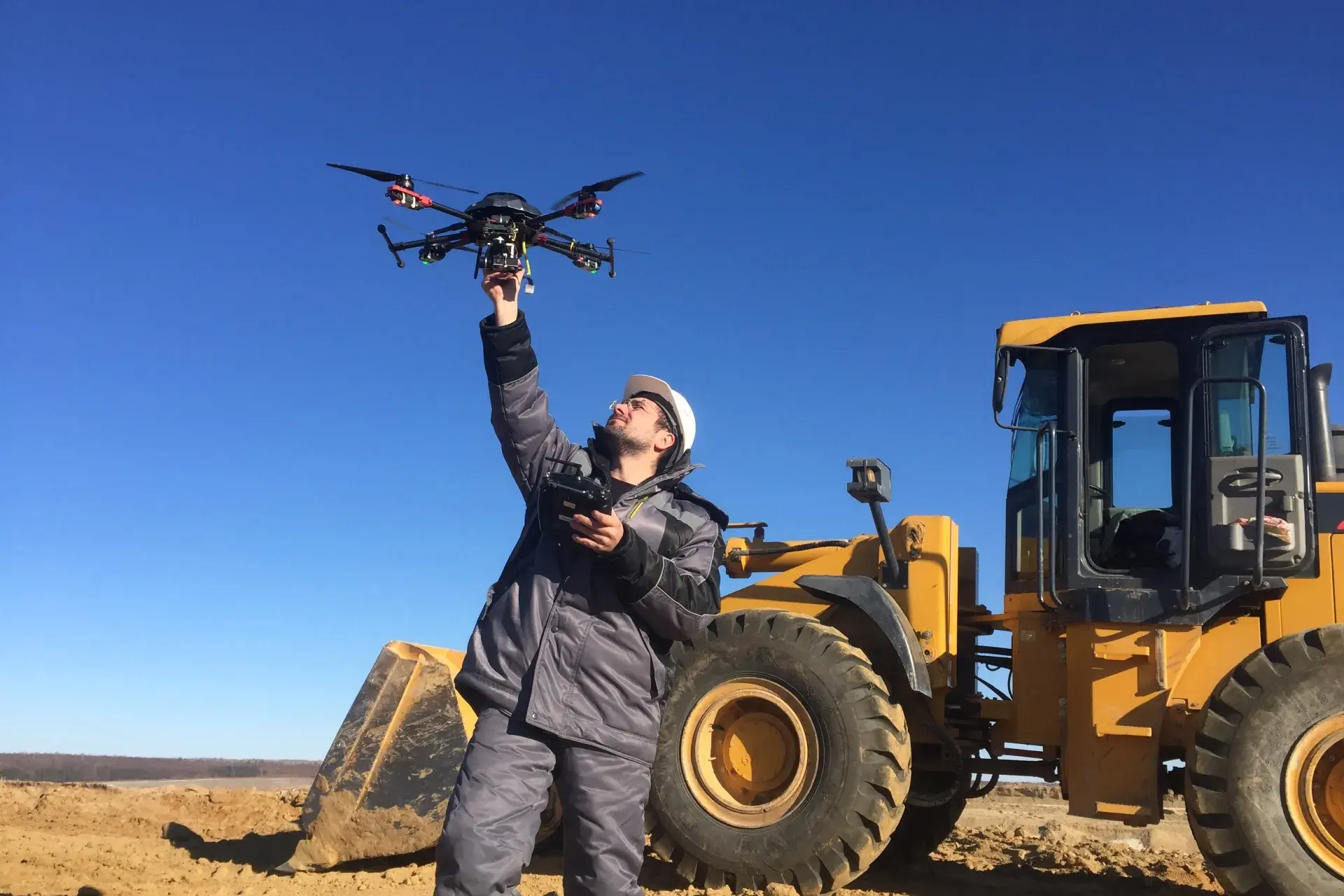
A Project Manager is about to begin site work on the project and has decided to manage their own drone flights and data processing in-house. He designated a Project Engineer to obtain a FAA license and fly the drone each week. He is using additional software, plus some additional engineers on staff to help process the data.
Here's a rough estimate of what they need to get started with the basics:
Assuming weekly flights, it takes the Project Engineer up to nine hours each week to set up Ground Control Points and fly the site (think: preparation, drive time, ground control checks & refresh plus actually flying the drone and capturing the images). It is also important to mention that the Project Engineer is not doing what he was initially hired to do while running drone flyovers. At the same time, hiring a separate full-time employee just for the drone program may not be efficient. The Project Engineer then passes the data to his colleagues for processing, and it takes them approximately two to three hours to process the data (assuming little to no troubleshooting accuracy issues relative to the quality control points).
In order to be able to use this data effectively, the Project Manager must also pay for analytic software, and it takes 20 to 60 minutes to upload the processed data, view it, and start extracting the desired analytics. If the Project Manager elects to use an in-house GIS or CAD technician to generate the necessary calculations for the project using photogrammetry products instead of using software designed to perform these calculations, the net cost per calculation increases even more.
At this point, there is significant lag time between flying the project and being able to access their project data. If the Project Engineer flies the project on Monday, by the time data processing and uploading is complete, the Project Manager won't have answers until Wednesday or Thursday depending on how smoothly the drone data capture, photogrammetry, and data analysis processes went. This lag time and shortage of in-house experienced people prevents project teams from working with the most current data when they need to make critical decisions.
Let's break down the weekly labor cost: 13.5 hours x $125 = $1,687
Over a 36-week period, that amounts to over $60,000 in personnel costs alone! Software, insurance, licensing, drone, and training will cost an additional $15,000. Managing an in-house drone program will cost this project approximately $75,000 over a 36-week period.
Now let's compare the time and cost of using a third party solution. The Project Manager calls TraceAir to give him the details of the project (75 acres, 36 week construction duration). Because TraceAir is turnkey, the PM doesn't need to worry about who on his team will become a licensed drone pilot and spend valuable time each week surveying the site and processing data. And since TraceAir includes overnight data processing, the multi-day lag time between flying the site and accessing the data is eliminated. The project team can access their data in TraceAir's software the next morning from their laptop, tablet, or phone.
Now let's compare costs:
The cost of TraceAir is approximately 1/3 the cost of an in-house drone program! In the case of this project, the cost would be about $25,200.
Managing a drone program in-house is costly, time consuming, and uses valuable labor resources. It also places the burden of risk on the contractor. In contrast, using TraceAir is less expensive, produces solutions faster, and lets the project team focus on what's important: site development. Let us help you streamline your processes for decision making and collaboration while reducing the risks involved with questionable data analytic processes/tools.
3 min read
Despite an increase of 77% from last year, the number of lots available for residential building in the US remains “significantly undersupplied”,...
2 min read
Lump sum contracts have long been a staple in the construction industry. They provide a clear scope of work and a fixed price, which can be...
2 min read
We hear it from construction teams all the time: there aren't enough hours in the day. Between problem solving, progress tracking, and dispute...