


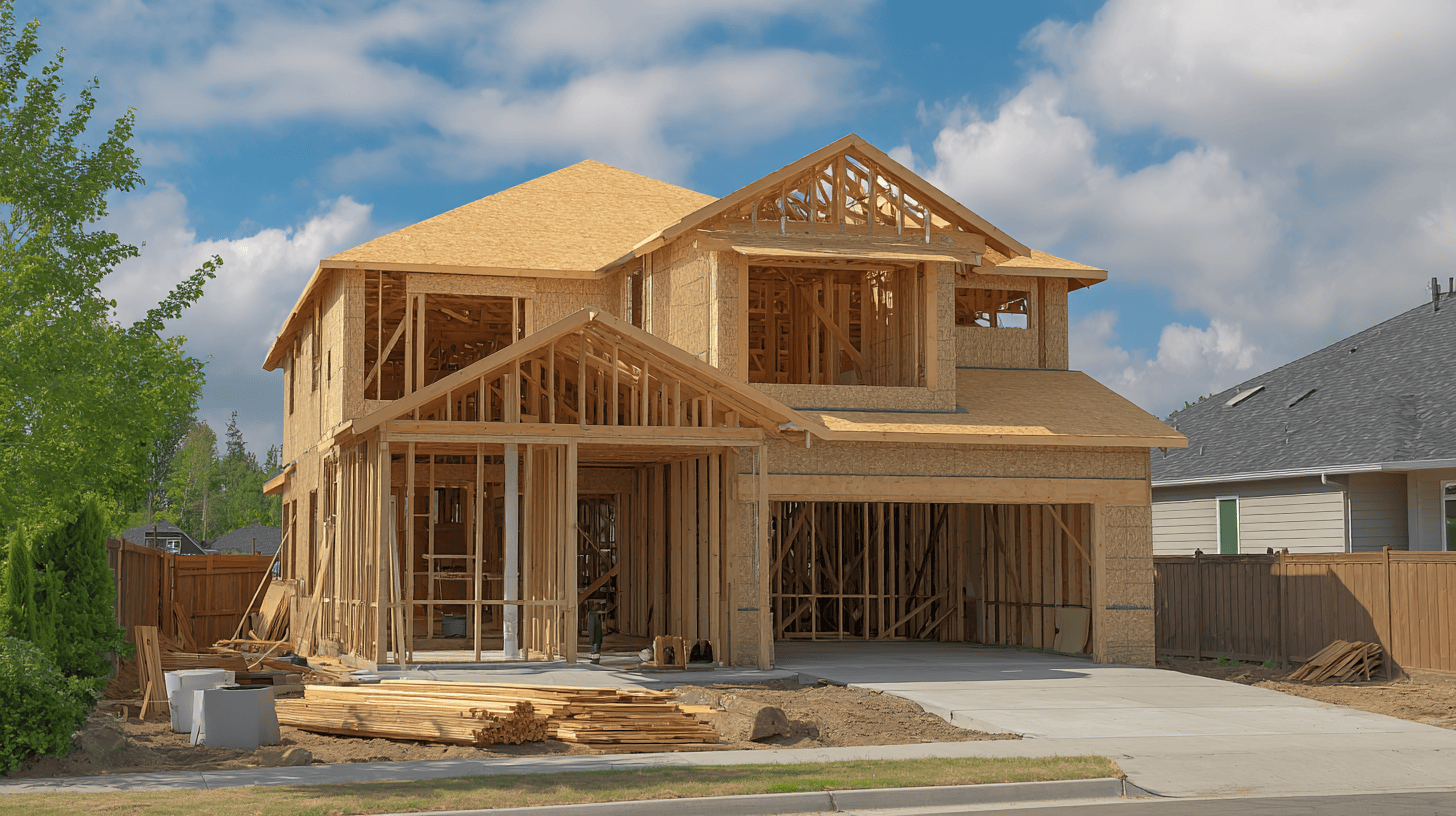
The housing market isn't just tough right now—it's brutal. Mortgage Interest rates are still high, skilled workers are becoming harder to find, and uncertainties around tariffs and their impact on material costs are making it a challenge to forecast new projects. The numbers tell the story: Zonda reports that nearly 40% of builders now say demand is slowing (compared to just 5% last year), while tariffs could spike construction costs by 9.3%. That's potentially $10,000–$15,000 more per home, slashing already-thin margins by 5–10%.
Facing these pressures, many builders have shifted their attention toward prioritizing homes already in progress. It’s a smart strategy: by focusing on completing existing projects, builders leverage investments already made in materials, labor, and land. This shift significantly reduces upfront costs and the risks tied to new developments. Homes already under construction offer crucial benefits when predictability is scarce, like more predictable revenue, faster returns, and steadier cash flows. Reducing speculative building also means less risk of ending up with unsold inventory, giving builders a critical advantage despite uncertain market conditions.
So what can builders do to not only weather this transition, but thrive? The answer is embracing strategies that focus on efficiently speeding up vertical construction and bringing houses to market faster—without cutting corners on quality or safety.
Here are five actionable strategies top builders are using right now to maintain their competitive edge.
1. Stop treating documentation like paperwork
Poor documentation has the potential to bleed money from your projects every day. When you rely on scattered phone photos, random cloud folders, and whatever notes someone remembered to jot down, you're setting yourself up for expensive headaches. Consider a scenario where a builder discovers a plumbing issue post-drywall installation—without proper documentation, determining responsibility can stall progress for weeks.
The builders winning right now have flipped the script. They treat documentation as their insurance policy and competitive advantage. When issues arise (and they inevitably do), they can immediately show what happened, when it happened, and who's responsible. Less arguments and less delays.
2. Hunt down problems before they hunt you
Every experienced builder knows this truth: a $100 problem caught early stays a $100 problem. But, a $100 problem caught late becomes a $5,000 nightmare.
Early defect detection has always been essential, but the traditional methods builders use are rapidly becoming outdated. Historically, manual inspections, simple digital photos, and subjective field reports have been the industry standard—methods that are highly prone to oversight and human error. With superintendents and field managers stretched thin across multiple tasks and sites, traditional inspections often miss subtle yet critical issues until they're costly to fix.
Today’s leading builders are recognizing the limitations of these approaches and turning to more advanced and systematic methods, particularly 360° visual documentation. Unlike traditional photos, 360° documentation provides comprehensive, navigable visual records pinned precisely to floor plans, ensuring every detail is captured clearly and in context. By allowing teams to revisit and review every stage of construction virtually, 360° images make detecting defects a collaborative, proactive, and objective process.
With 360° documentation, your team can instantly pinpoint exactly when and where a defect happened, so it gets fixed quickly—before it becomes expensive. This approach makes defect detection simple and proactive, not a last-minute scramble. Builders using visual documentation today aren't just cutting down on their “windshield time” and solving immediate problems; they're setting themselves up to easily adopt future tools, like AI-assisted defect detection, making their process even faster and smarter.

3. Make communication crystal clear (because confusion is expensive)
Miscommunication isn't just frustrating—it’s incredibly expensive. A recent study revealed U.S. contractors wasted $30–40 billion in 2022 from labor inefficiencies, with nearly half of surveyed firms reporting productivity declines due to poor jobsite communication. In fact, as much as 11–15% of field labor hours are unproductive, and contractors estimate they could reclaim around $15–25 billion of these wasted labor costs simply by improving clarity and coordination.
Builders who stay ahead use visual tools that eliminate guesswork entirely. Instead of relying on memory or scribbled notes, they’re digitally pinning exact defect locations onto floor plans, supported by clear photos, timestamps, and detailed notes that trades can access instantly.
When your teams and trades know exactly what to fix, where to fix it, and how to fix it, you spend less time going back and forth—and more time actually building.
4. Be everywhere without being everywhere
Trying to manage multiple job sites used to mean practically living in your truck and burning through your day (and gas money) on windshield time going from one site to another. But even as truck cabs start to have all the creature comforts of a modern co-working space, top builders are finding smarter ways to be everywhere.
Remote oversight tools are helping supervisors, directors, and VPs keep eyes on multiple projects—without spending all day behind the wheel. They’re now reviewing detailed visual updates remotely, catching potential problems long before they spiral, and making informed decisions wherever they are.
It’s not about replacing boots on the ground; it’s about making those boots more productive. By knowing exactly what’s happening on every site, your team spends their valuable time fixing issues, not chasing them.
5. Build your foundation for tomorrow, today
The builders who will dominate the next decade aren't just surviving today's challenges—they're preparing for tomorrow's opportunities.
They're investing in solutions that deliver immediate ROI while positioning them for future innovations. Structured visual documentation and communication platforms aren't just solving today's problems; they're creating the foundation for AI-assisted defect detection and other game-changing technologies coming down the pipeline.
Think of it as building infrastructure for your business the same way you build infrastructure for your homes—with the future in mind.
The bottom line: adapt or get left behind
Today’s housing market doesn’t care how you’ve always done things. It rewards builders who adapt quickly, ditch inefficiencies, and find new ways to stay profitable even when margins tighten.
The five strategies we've covered aren’t just about surviving—they’re your competitive edge. While your competitors grumble about market conditions, you could be spotting opportunities hidden in the challenges.
The question isn’t whether things will get easier (they probably won’t anytime soon). The question is whether you'll be the builder thriving regardless of what the market throws your way.
Want to see how TraceAir's visual documentation and site intelligence platform can help implement these strategies at your job sites? Learn more about TraceWalk 360 Interior Scanning and schedule a demo to see how we're helping builders stay competitive in any market.