


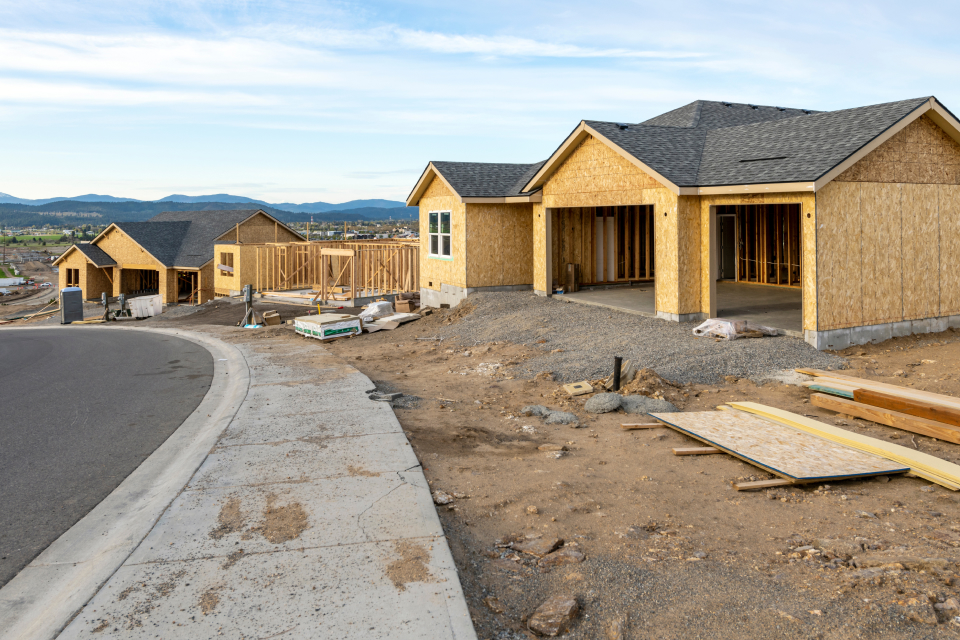
After the pandemic-fueled buying spree that led to the most powerful U.S. housing boom in 15 years, the demand for housing has slowed as mortgage rates have risen. This has been a challenging time for homebuilders and land developers, but the market is showing clear signs of picking back up. According to NAHB Chief Economist Robert Dietz, single-family construction will bottom out in the first half of 2023 and begin to improve in the latter part of the year. This forward momentum will lead to a calendar year gain for single-family starts in 2024.
When the housing market was booming, homebuilders and land developers were so focused on keeping up with demand and capitalizing on the market that they often overlooked inefficiencies and failed to keep up with new technology. However, the current slowdown offers a great opportunity to step back and evaluate your operations, identify areas of improvement, and adopt new technologies that can make your team more efficient and productive. Here are some tips:
Evaluate Efficiency
This is an ideal time to reassess your operations and identify areas of improvement. Look for bottlenecks, unnecessary steps, redundancies, and better uses of time and money. Small inefficiencies quickly eat away at profit margins. Do any of these ring a bell with your team?
- You spend hours each week driving from job site to job site to obtain information.
- Tasks are repeated multiple times — moving dirt, having lots surveyed, etc.
- You rely on expensive third-party consultants to obtain information.
- Over or under purchasing of materials is common.
Get Organized
Chances are you spend a lot of time every day looking for information. This time only increases as the project progresses. Disorganized job details cause confusion, frustration, and missed deadlines. When working with multiple contractors, they likely use their own project management methods. It’s easy to see how using multiple sources of data can get confusing. What does an unorganized project look like?
- One clear source of project information that the entire team can access does not exist.
- With better information, your team could have made better, more profitable decisions.
- Verifying what work has been completed for billing is unclear.
- You do not have historical records of your projects.
Empower Your Team
The majority of people on land development teams are unequipped with tools to get quick, accurate project information, forcing them to rely on others. This creates knowledge silos and slowdowns. Empowered teams can focus on completing tasks. Here’s proof your team is not empowered with tools to be successful:
- Field staff are unequipped with quick methods of viewing project plans, requiring them to constantly contact the office for clarification.
- Teams are unable to easily collaborate or solve problems on their own.
- Clarification is needed after meetings and mistakes are made in the field.
Reduce Risk
Risk is an inherent aspect of any land development project, and no matter how well-prepared you are, unforeseen issues will occur. However, by taking a proactive approach to risk management, land developers can significantly minimize the potential impact of issues. Many traditional risks can now be significantly reduced using technology. If you’re experiencing any of the following, consider a change:
- You generally need to import or export dirt at the end of your project.
- Alignment issues are common — misplaced utilities, transformers, driveways, etc.
- Rework and change orders due to miscommunications.
- Costly issues could have been avoided if they were discovered earlier.
Embrace Technology
Drones, AI, and other technologies have brought major advancements to land development. Top homebuilders and land developers are incorporating these tools to dramatically increase efficiency while reducing risk. Adopting technology can give you the edge you need to stay ahead of the curve, survive market slowdowns, and thrive during busy times. Do any of these sound familiar to your team?
- There is no easy and fast way to compare project plans to the current condition.
- Days or weeks are spent setting up surveys and waiting for results.
- You don’t have a way to view your entire project and track progress regularly.
- Project data can only be accessed in the office or on your computer.
We’re here to help!
TraceAir is a software that provides site intelligence to land developers, allowing them to streamline their processes and reduce costs significantly. Although it may seem counterintuitive to implement a new technology while your projects are slow, TraceAir has proven to be a valuable tool to top homebuilders and developers during this time.
With TraceAir, you’re able to keep your projects moving forward with extreme efficiency. TraceAir enables you to stay on schedule, collaborate, track progress, achieve site balance and more, without having to be on site. The only site intelligence software developed specifically for homebuilders and land developers, TraceAir is easy to use, affordable, and beneficial to any land development project.
Curious how it works? Schedule a demo to learn more.