


Hillwood Communities is one of North Texas’s premier developers of large-scale, master-planned communities. With multiple active phases and dozens of stakeholders on every project, their development team must constantly manage complex grading strategies, contractor coordination, and shifting site dynamics—without sacrificing schedule or budget.
In this Q&A, we speak with Patrick Cowden, Director of Development for DFW, about what it takes to lead efficient land development at scale—and how his team uses TraceAir to proactively manage dirt balance, avoid rework, and keep projects on track. In one case, TraceAir helped Hillwood save over $1.5 million on a single grading phase by not having to move dirt twice.
The Challenge
Hillwood Communities faced a recurring and costly problem: managing dirt balance across large, multi-phase master-planned developments. Relying on contractors, engineers, and surveyors for dirt quantities and progress tracking often led to inefficiencies, expensive rework, and communication breakdowns.
The Solution
TraceAir provided Hillwood with a smarter, faster way to monitor dirt quantities, validate grading work, and keep stakeholders aligned. With easy-to-use tools, high-resolution imagery, and collaborative map-based planning, the team gained visibility and avoided costly mistakes—saving millions in the process.
Q: Tell us a little about your role at Hillwood and your background in land development.
Patrick Cowden: I’ve been with Hillwood for 12 years and have spent my entire career in land development. I started straight out of college, and as I’ve grown, so has the number of active projects I oversee. Today, I’m responsible for managing the development of multiple large master-planned communities across DFW. The pressure’s always on to keep things moving, especially with buyer demand still strong and team resources stretched thin.
Q: What do people often misunderstand about land development?
Patrick Cowden: A lot of folks underestimate just how dynamic the job is. Every site is different—you’re dealing with weather, soils, politics, utilities, dirt—you name it. Plans change constantly, and if you can’t adapt quickly, it gets expensive.
And dirt is probably the most misunderstood part. People assume dirt is dirt. But managing it—knowing where it is, where it needs to go, and how to move it efficiently—can make or break a project. Especially in multi-phase communities where dirt balance is everything.
Q: What led you to start using TraceAir?
Patrick Cowden: We were looking for a better way to manage dirt. On large master plans, we often have several phases running at once. Before TraceAir, we relied on contractors to estimate where we stood and survey teams to give us occasional topo updates. It was time-consuming, expensive, and not always reliable.
There was one project that pushed us over the edge, we had four concurrent phases, including a few isolated areas we knew would be hard to access later. Trying to manage the balance manually between our contractor, surveyor, and engineer just didn’t work. That experience made it clear: we needed a better system.
On our big master-planned projects with multiple active phases, one of the toughest challenges has always been figuring out where and how the dirt balances across the site. Before TraceAir, we were spending a lot of money to move dirt twice or haul it in from elsewhere. Now with TraceAir, we can track, plan, and balance with confidence. It’s transformed our entire approach to development, making us more efficient while saving time, money, and headaches.” – Patrick Cowden, Director of Development, Hillwood Communities
Q: How does TraceAir help specifically with dirt management?
Patrick Cowden: The visibility we get with TraceAir is a game changer. We can measure volumes across the entire project, down to individual lots and stockpiles, whenever we need, not just when a survey crew comes out. That means we know exactly where we stand on cut and fill and can make adjustments before it turns into a problem. If a contractor says, “I think we’re short on dirt,” we can confirm it in minutes. On projects where balance is tight, that kind of clarity makes all the difference.
Q: What are some of your favorite tools within the TraceAir platform?
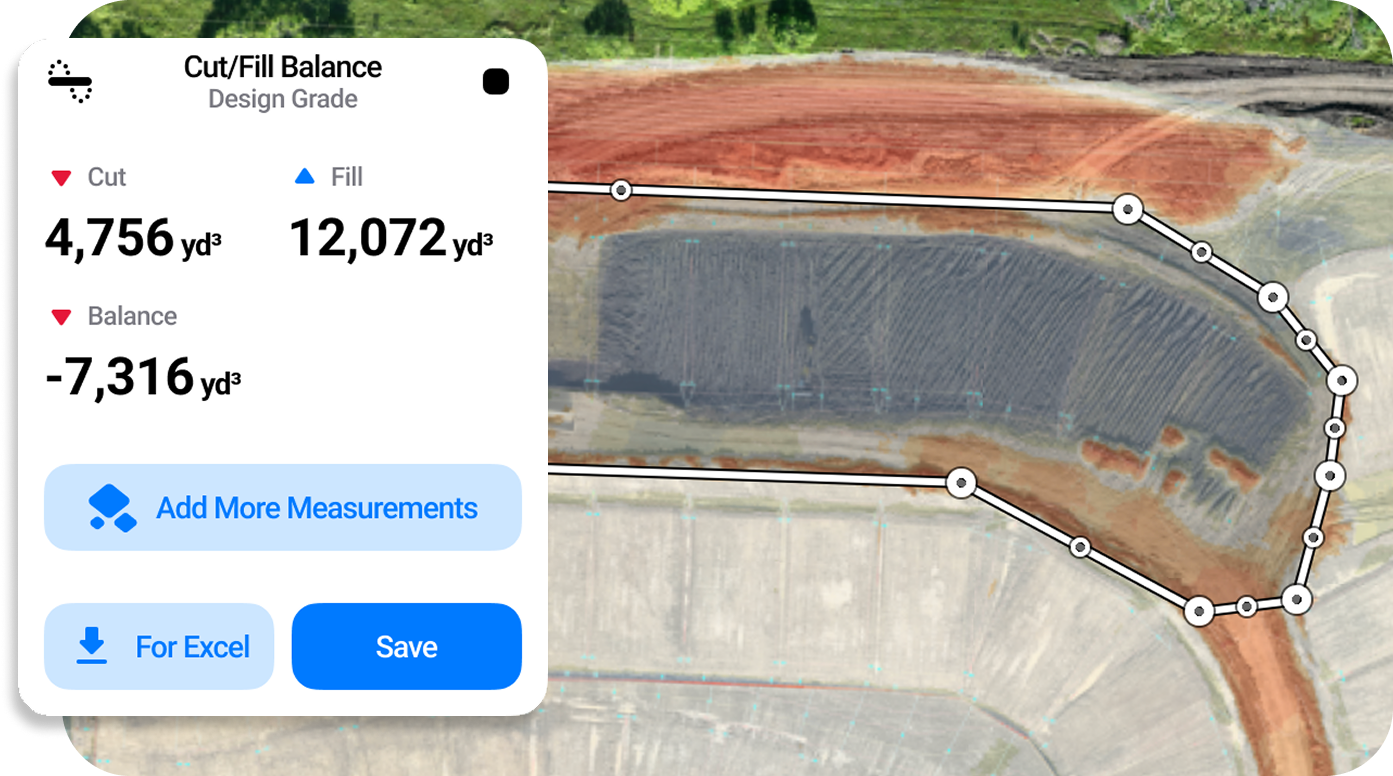
Patrick Cowden: One of my favorite tools is Lot Viewer. It makes it simple to confirm that every pad is built exactly to plan before it’s handed off to a builder. We can check drainage, elevations, and grades instantly, and then share that same information with our builders. With everyone looking at the same data, re-stakes are way down, and the “Are you sure this is right?” conversations have all but disappeared.
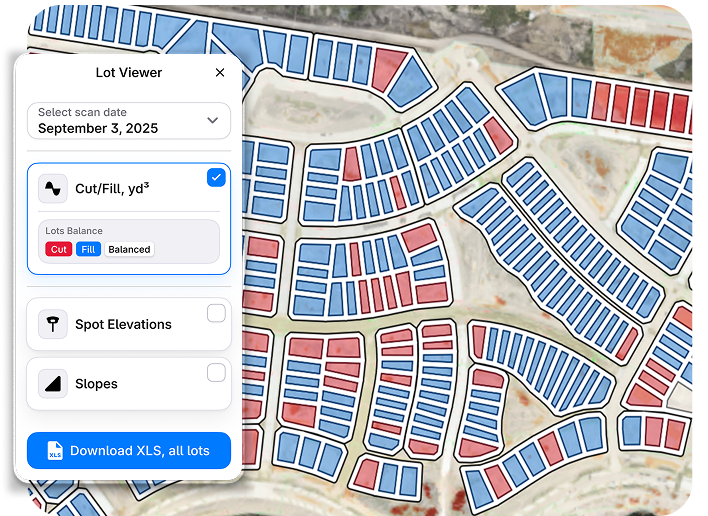
Beyond that, the cut/fill analysis has been huge for managing dirt quantities. We can measure anytime we need, instead of waiting for a survey, and that’s saved us a lot of money. We use the overlay tool all the time—planning amenities, trails, and testing designs to see how they actually fit on site. Our planners and architects love being able to adjust early, and on large master plans we overlay future phases to guide grading, engineering, and where we go next. It’s become a critical tool for planning with confidence.
One of my favorite things about TraceAir is being able to track all of our projects from our office instead of driving all over the metroplex. Nothing replaces getting boots on the ground, but when you can’t be in 15 places at once, TraceAir gives you an easy, one-stop way to see exactly what’s happening on every site.” – Patrick Cowden, Director of Development, Hillwood Communities
Q: What are you able to do now that you couldn’t before using TraceAir?
Patrick Cowden: Make fast, confident decisions. On a big new project in Celina—about 700 lots—we needed to generate roughly 100,000 cubic yards of material from the first phase and move it into the second. Halfway through grading, our contractor said, “We don’t think we’re going to hit that number.”
With TraceAir, we confirmed it right away and gave our engineer time to adjust the grading plan, lowering the site to create the dirt we needed. The contractor never had to leave, we stayed on schedule, and we avoided importing dirt from elsewhere. Before TraceAir, we wouldn’t have caught it in time. That was a huge win in terms of keeping the project moving without disruption.
Q: How would you describe the ROI from using TraceAir?
Patrick Cowden: The ROI with TraceAir has been tremendous. On one project alone, TraceAir saved us more than $1.5 million. We needed to generate about 100,000 cubic yards of material while mass grading a large site, and the platform gave us the visibility to pivot and modify our plans mid-project to make sure we hit that number, without having to move the dirt twice.
Across all our communities, TraceAir has helped us avoid costly mistakes, reduce rework, and dramatically improve efficiency. Instead of waiting weeks for surveys or relying on estimates, we can verify quantities, pad grades, and progress instantly. That keeps contractors moving, builders confident, and projects on track. When you add up the time saved, the miscommunications avoided, and the dollars kept in the budget, the return is undeniable.
Q: How has TraceAir improved collaboration across your teams and partners?
Patrick Cowden: TraceAir has really become part of our day-to-day. Our development managers use it to check progress and share updates with contractors. Our homebuilding team uses it to monitor vertical construction. We even bring it into meetings with municipalities to show project status. Having a single source of truth that everyone can pull up instantly makes all the difference. And because TraceAir provides unlimited licenses, it’s easy to give everyone access—contractors, builders, engineers, city officials—so there’s no barrier to collaboration.
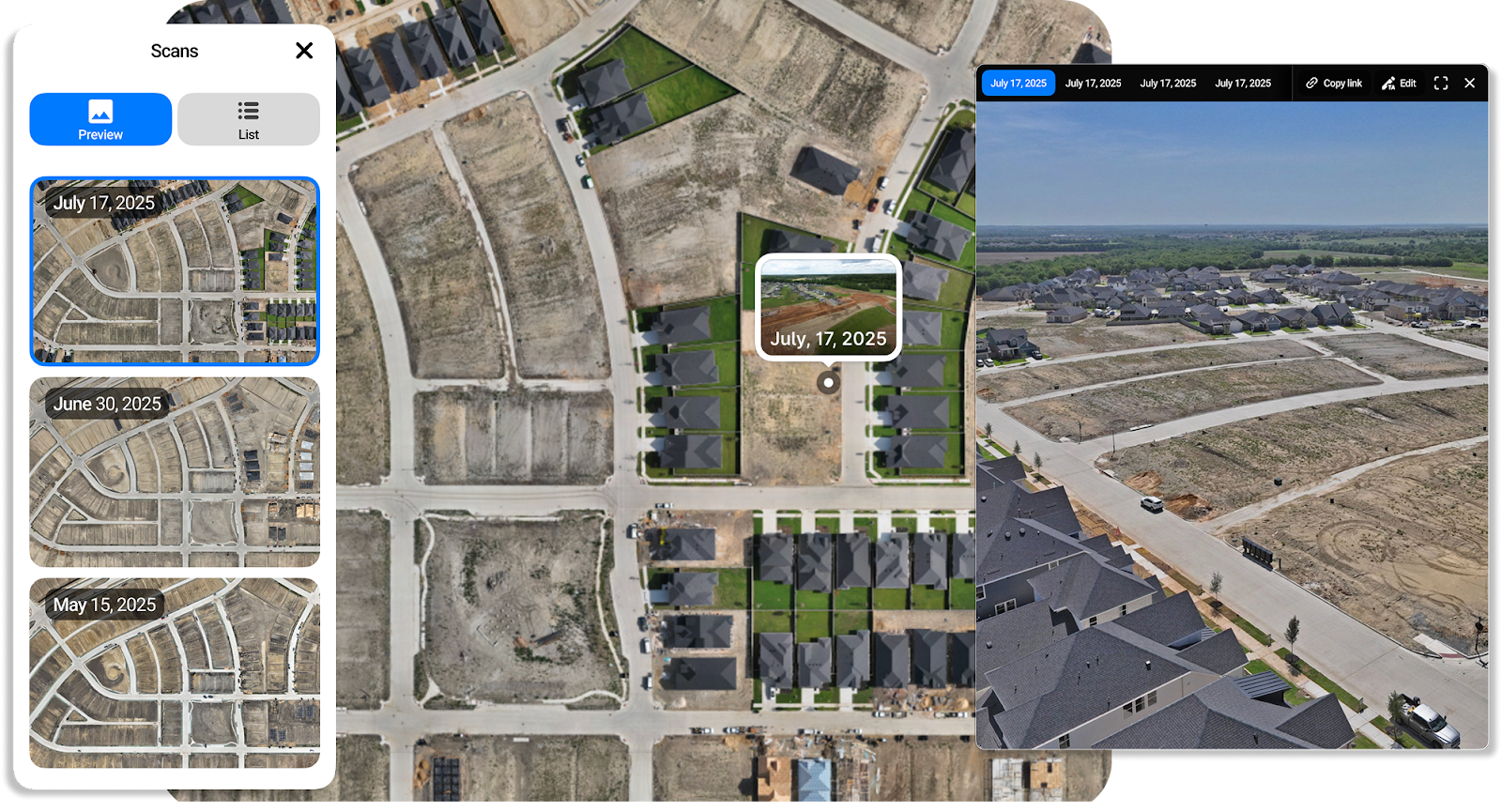
Transparency builds trust. When all the stakeholders are looking at the same data, it removes friction. We can make faster decisions, avoid finger-pointing, and show progress visually instead of trying to explain it. And it’s efficient. Instead of having to drive out to a site, or go back and forth over the phone, we just pull up TraceAir. People immediately get it. In fact, we’ve had folks in meetings ask, “How can I get access to that?”—which tells you how valuable it is.
The biggest result we’ve seen from TraceAir is how much it’s improved communication. Both our internal team and external partners can see exactly where things stand, log in themselves, and explore the site. Everyone’s on the same page, and overall communication has gotten dramatically better.” – Patrick Cowden, Director of Development, Hillwood Communities
Q: What made TraceAir stand out as the right fit?
Patrick Cowden: The simplicity and the quality. It was really easy to jump into the platform and start using it—we didn’t need a big rollout or training process. You can explore the site, take measurements, and see what’s happening in great detail. The resolution of the imagery really impressed us too. And I’ll add, the support has been unbeatable. Anytime we’ve had a question or needed help, the TraceAir team has been quick to respond and proactive in making sure we’re successful. That kind of partnership makes a big difference when you’re running multiple projects at once.
Q: Any final thoughts you’d like to share?
Patrick Cowden: I would highly recommend TraceAir to anyone in land development. It gives our team a smarter way to manage projects—we save time, we avoid mistakes, and we communicate better. It’s helped us tighten up dirt operations, verify work, and keep everyone aligned—without having to physically be everywhere at once.
What I really value is that it works for everyone—project managers, engineers, builders, contractors, and even municipalities. Whether you’re in the field, in the office, or on the go, you can pull up the same data and make confident decisions. That visibility removes friction from the process, helping us move faster together. Everyone loves it, we use it every single day and we’re always looking forward to our next scan from TraceAir!
When one platform helps you avoid million-dollar mistakes, while improving collaboration and making everyone’s lives easier? That’s a platform worth keeping.
Give TraceAir a Try
The secret behind Hillwood Communities’ success isn’t just scale, it’s leadership. Patrick Cowden has set the tone by thinking outside the box and embracing tools to stay ahead in an increasingly demanding market. With TraceAir, Hillwood has redefined how development gets done, streamlining project management, strengthening collaboration, and safeguarding the bottom line. The result: smarter decisions, stronger partnerships, and millions saved.
See what TraceAir can do for your projects—schedule a demo today.