


Heath Melton joined The Howard Hughes Corporation in 2015 and is currently the President of the Phoenix Division, where he is spearheading the development of Teravalis, Howard Hughes’ first and largest master planned community in Arizona. In his previous role as Executive Vice President of Master Planned Communities in the Houston Region, he was responsible for residential planning and development of HHC's three highly acclaimed MPCs in Texas: The Woodlands®, Bridgeland® and The Woodlands Hills®.
Under his leadership, these communities have received countless awards and accolades. Prior to joining The Howard Hughes Corporation, Melton was a general manager for Travisso working for Taylor Morrison, Austin Division. He also worked for Sueba and KB Home in the Houston market.
Melton’s impressive journey in the land development industry reflects his unwavering commitment to excellence and innovation. Recognized for his strong leadership and forward-thinking, he stands out as a distinguished leader in the industry. A testament to this, Melton was one of the early adopters of TraceAir as an innovative way to streamline his operations. Discover more about Melton’s experiences, insights, and the impact of TraceAir in this interview:
TraceAir: How did you get started with TraceAir?
Heath Melton: At Howard Hughes, we’re always looking for new technology that can enhance and improve our way of doing business. We like to say we “lean into technology”. I connected with TraceAir on LinkedIn, and the capabilities of the platform intrigued me. As I got to know the team at TraceAir, they really aligned with us at Howard Hughes. We decided to embark on the partnership and it has paid for itself in dividends over the last five years.
TraceAir: What was your first project with TraceAir?
Heath Melton: I started using TraceAir in 2018 on the 11,500 acre master planned community, Bridgeland in Houston. We spent about 9 months really understanding what TraceAir could do for us, how it could improve our processes, what the capabilities were for my team and our stakeholders. We found it very valuable and began adding it to more projects.
At the time, I oversaw 3 of our master planned communities in Texas. They were very spread out, making it difficult for me to get out to all of them. TraceAir allowed me to visit them without physically having to drive to them. And that was really important, because the drive time could take me several hours. Getting that time back in my life was huge. Having the sites flown every week by TraceAir allowed me to manage the projects in real-time from anywhere.
TraceAir: Tell us about Teravalis and what makes that project unique?
Heath Melton: Teravalis is a 37,000 acre master planned community located 100% in the city of Buckeye, Phoenix. We anticipate up to 100,000 single family residents and 55 million square feet of commercial space. What makes this project so unique is its overall size, scope, and scale.
When you think of 37,000 acres, most people have a hard time putting that into context. That's 58 square miles. If you're from the West Coast, think of Irvine, California. If you're from the South, think of Frisco, Texas. If you're from the Midwest, think of St. Louis. And if you're from the East Coast, think of Alexandria, Virginia. We'll be twice the population and four times the size of Alexandria, Virginia. So 100,000 rooftops, roughly 300,000 people spread across 37,000 acres or 58 square miles.
TraceAir: When did you start using TraceAir on Teravalis?
Heath Melton: We brought TraceAir in at the very beginning during the land acquisition phase. I led the land acquisition here in Arizona for Teravalis, and it was a very big endeavor. TraceAir’s ability to do a quick and accurate topo analysis across 37,000 was huge. With TraceAir we were able to do it in a matter of weeks, whereas normally that might have taken a few months to accomplish.
TraceAir: What are some of the challenges of Teravalis that TraceAir helps with?
Heath Melton: We have a lot of topography on this project. Being able to overlay our grading plans and use the heat maps within TraceAir helps us effectively balance the site. We track progress on a weekly basis and collaborate with our design engineers and contractors. It’s a huge advantage for us.
TraceAir also helps improve our overall efficiency and effectiveness as we go from planning and design to implementation. Planning any master planned community faces many challenges, but 37,000 is an especially large undertaking. Being able to overlay our conceptual plans in conjunction with the topography as we’re going through the design phase is really helpful.
It helps us optimize where we locate our amenities, where we locate our walking paths and some of our parks throughout our community. Having that geographical spatial awareness in real time, we can take a look at things like topography, where drainage channels are taking place, and think about it in the context of our plans. We can ask ourselves, “does that truly align with what exists on the ground today?”. So by having that “at your fingertip” capability has been huge for us in the planning process.
TraceAir: How do you get the most out of TraceAir?
Heath Melton: First and foremost, we fly our projects on a weekly basis. This gives us real-time data of what’s happening in the field. We really prioritize TraceAir as a collaborative platform and single source of truth. We upload all our design engineer plans, landscape plans, and pull it up in meetings, and we share it with our entire team and stakeholders. This really helps all get on the same page and helps us identify potential conflicts that we have at the plan level, before they become reality in the field.
TraceAir: What are the biggest results you’ve seen from implementing TraceAir?
Heath Melton: We’ve had several. I’d say the biggest result we’ve had from implementing TraceAir is really being able to be efficient with our time. It’s hard to put a dollar value on that, but obviously everyone's time is very valuable. Since we cover so many different properties, and most of them have quite a distance between the field and office, even just reimbursements for employees making those commutes add us quickly. TraceAir allows us to be “in the field”, if you will, by just logging in. We especially like the 360 degree photos. And since we fly on a weekly basis, it’s really accurate to see the current status of the site. It gives everyone a lot of comfort.
A close second is being able to spend significantly less time and money on surveyors, engineers, and consultants. We now rely on TraceAir to check the sites from a grading standpoint, and then only send surveyors out there on key points to really finalize the overall grading of the site. These two key components alone have probably resulted in at least a 20% saving to us.
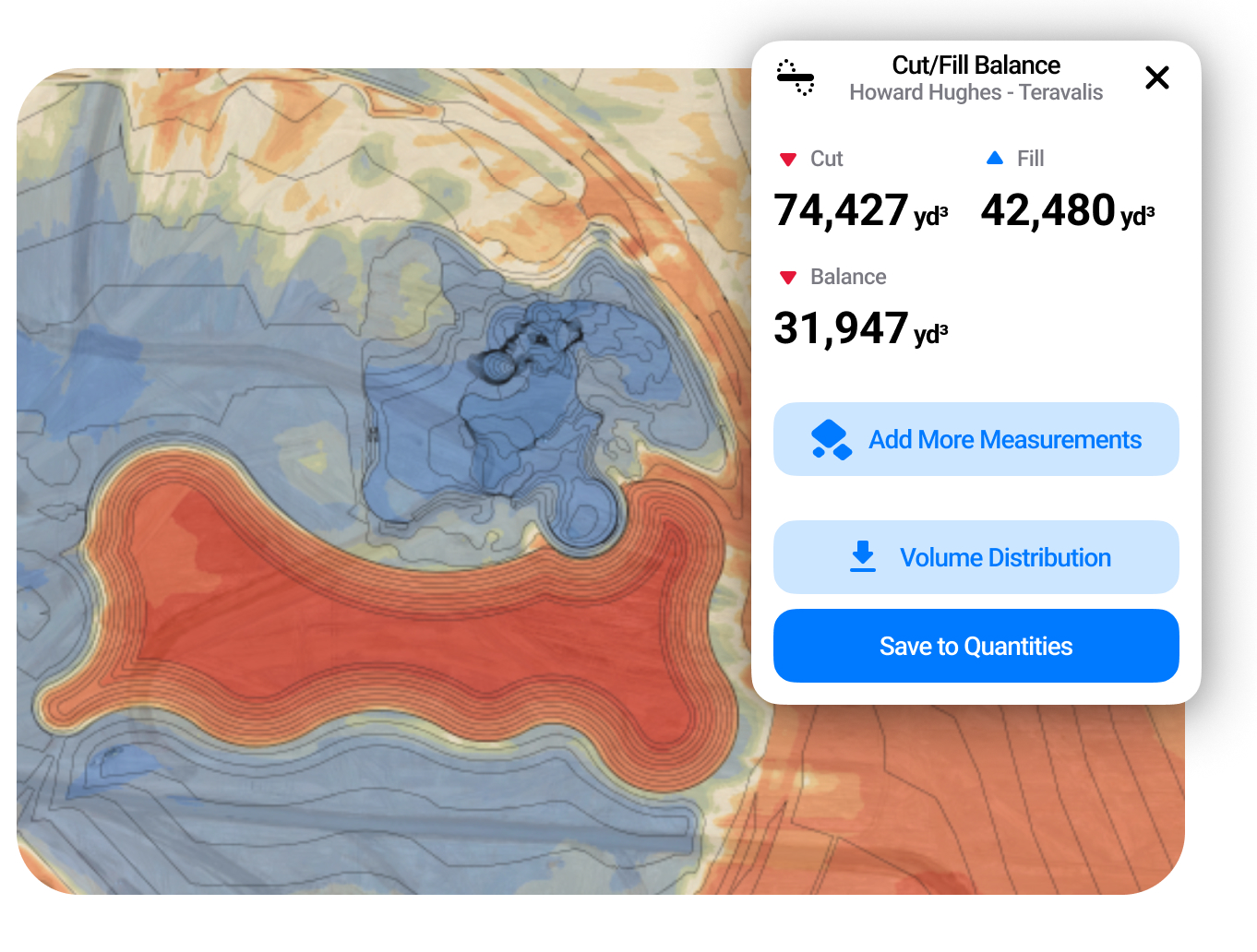
Another huge result is being able to verify the accuracy of what’s happening in the field and hold everyone accountable. Sometimes we get change orders that rely a lot on dirt movement and dirt quantities, and we can verify those are accurate. So if we get a change order of moving 50,000 cubic yards of dirt, and maybe they'll only move 10, we can really hold our contractors accountable. This saves us a lot of time and money.
TraceAir: Do you have any stories that come to mind when TraceAir helped you avoid a costly setback?
Heath Melton: Yes! We had a contractor that had sent us a change order for moving a large amount of dirt. It was roughly 100,000 yards from one of our stockpiles. We were able to go into TraceAir and measure the stockpile, and then compare that measurement to when the contractor started.
It was a fraction of the amount that the contractor had informed us they had moved. So we were able to call the accuracy of that change order and reduce it substantially to tie to what actually took place in the field. It was a huge savings for us.
TraceAir: Which TraceAir features do you find to be the most valuable?
Heath Melton: The ability to overlay our plans is very valuable. I use this in many ways, but it is especially helpful when I’m communicating to our corporate office. I can show them real-time where we’re at within the development. I can overlay our grading plan, and we can see the cut fill quantities to see if we're 70% complete, 80% complete or nearing a hundred percent complete. And then I can also overlay the land plan that shows each individual lot, and so the team can see where we're at in the progress. We can also see the accuracy of the roadways taking shape, and how that ties into the overall land plan.
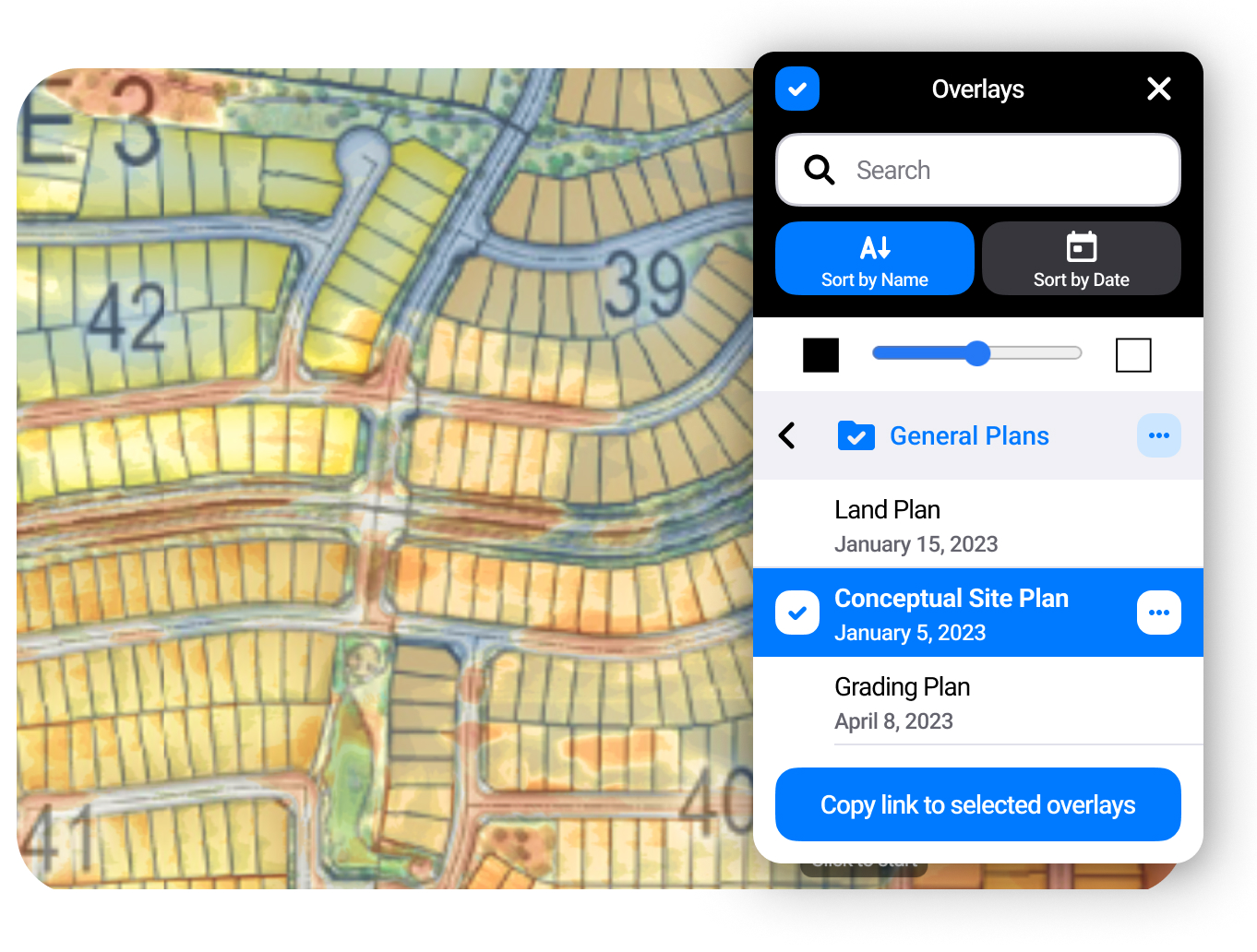
Another really valuable feature is the historical archive of scans. It’s great for seeing progress over time. We can look back a week, a month, or even on a quarterly basis. Oftentimes I like to report to our corporate office our progress over time, and I do that as a snapshot in time. With TraceAir, I can easily show them what we’ve accomplished over the course of a few months or a year. This is really nice because it can be really hard to visualize this.
So when people think that your team's not doing a lot of work, this is the way to prove it. It is really inspiring for anyone to see the amount of work that takes place in a 12 month period, especially when you're not actually able to get out there onsite and see it for yourself.
TraceAir: How has TraceAir changed the way you communicate and collaborate?
Heath Melton: TraceAir has helped us significantly streamline communication and collaboration. We share the platform with a broad range of stakeholders, both internal and external - our design engineers, our landscape planners, my team, the project management side, and even our homebuilders. This has been especially helpful for those that aren’t able to get out on the site often. Instead of them just believing us from word of mouth, I often pull up TraceAir and give them the real-time snapshot of what’s happening on the ground, and overlay plans so they can really see our progress. We can collaborate on conflicts before they become costly to us. It has been very, very valuable to us.
TraceAir: Has TraceAir helped improve your relationships with stakeholders?
Heath Melton: Absolutely. Sharing TraceAir with our stakeholders creates complete transparency and accountability. This is really important for me, because as we look to bring on different consultants, we truly focus on being good partners. And part of being a good partner is understanding how we communicate the capabilities of both teams, and how we can enhance the overall effectiveness and efficiency for all parties so we can, at the end of the day, have the best result possible. TraceAir helps us do that.
It also shows them that we’re on the cutting edge of technology and embracing it. Oftentimes when I show them, I hear, “Man, that’s really cool! I’d love to have TraceAir as part of our platform”.
TraceAir: How has your experience been with TraceAir in terms of getting started and overall support?
Heath Melton: From day one, we’ve had a great experience working with TraceAir. They not only take time to train my team members, but also any other key stakeholders that we allow access to the platform. The team at TraceAir is always willing to go above and beyond to help us. So anytime we want special reports or would like to see things differently in the platform, TraceAir helps us do that.
For example, we track housing from slabs to frame to finished homes. That's something they've built into their system by working with us. We have special purpose districts, and we rely on the timing of district reimbursements. So TraceAir helped us forecast that out. And so we were able to increase the timing, at least the timing that we get those dollars back to us, which was huge to our bottom line.
TraceAir: What advice would you give to someone who is considering TraceAir for their own projects?
Heath Melton: I would highly recommend TraceAir. The entire team at TraceAir is really great to work with. They’ll help you get onboarded quickly and make sure that you really understand the platform. They take time to train your team and make sure that you get a full return on your investment. TraceAir helps you really maximize efficiency and identify areas where you can improve. Embracing TraceAir really gives you an advantage, helps you be more efficient, and helps you save time and money.
Learn More About TraceAir
Howard Huges stands at the forefront of technological innovation in the homebuilding industry. By leveraging TraceAir, they have gained a competitive edge, maximizing efficiency and profit margins.
To experience the transformative power of TraceAir for yourself, schedule a demo today.