2 min read

The Real Cost of Surveying: How Drones Save Time and Money

The Real Cost of Surveying: How Drones Save Time and Money
TraceAir | The Real Cost of Surveying: How Drones Save Time and Money
4:07

How often do you survey your project?‍

If cost were no issue, how often would you survey your project? Monthly? Weekly? Does that align with your project budget?

Surveying is an essential part of any land development project, however projects have relied on traditional surveying methods for far too long when other technologies, like drones, have emerged. Of course, there is a time and place for traditional surveying (e.g., pad or utilities certification), however frequent surveys using these methods are impractical for most projects due to the following factors:

  • Cost
  • Time
  • Accuracy

Below, we explore the comparisons between traditional surveying methods and drone technology for capturing project data.

It comes down to cost‍

Creating a topographic map for a project can be costly. A hand-rendered topographic map is expensive (anywhere from $2,000 - $15,000 depending on the size of the site), takes about a week or more to complete, and the information may still have inaccuracies due to the limited number of shots the survey can do. Moreover, the landscape in a one-week timeframe can be dynamic, so the map might be outdated by the time it is delivered.

An aerial topographic map is significantly more expensive and often more time-consuming given the need to schedule flyovers long in advance and process large amounts of data. Potential deviations can significantly affect volume calculations, which in turn may lead to construction delays and additional costs.

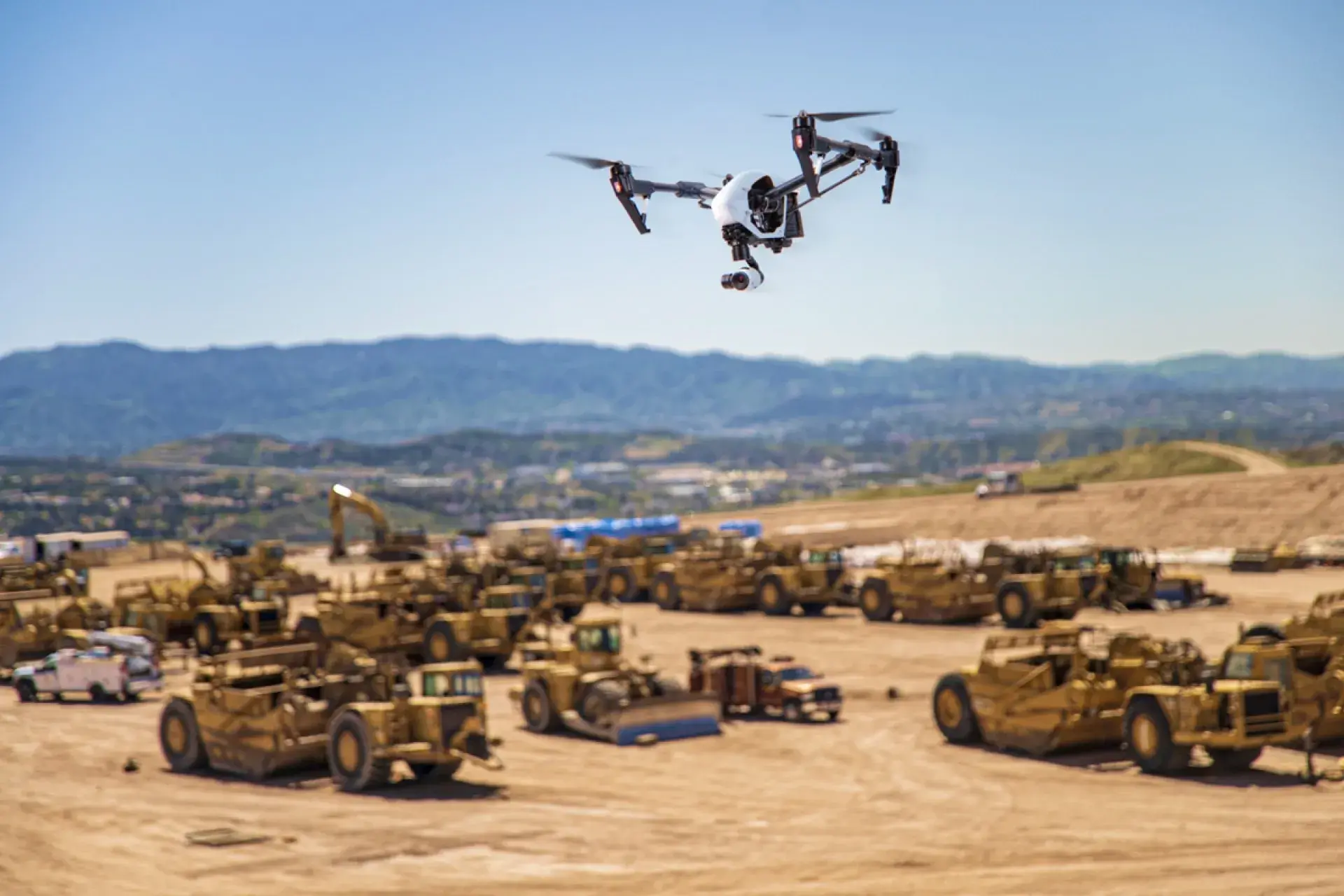
In contrast, drones are much less expensive for obtaining the same data. Mapping a project site using drones costs less than half the price of a hand-rendered map, and can be as low as a few hundred dollars per scan.

Where's my survey data?‍

Traditional surveying can take 2-3 weeks to map an entire project, depending on the area, which contributes to the higher costs. Surveyors and consultants are paid approximately $125/hour, therefore 2-3 weeks of work contributes to a higher overall cost. With such a slow turnaround of traditional surveying, it's likely that project teams would not identify a problem until it becomes very costly to correct.

Conversely, a single drone flyover and fast data processing allows project teams to see a near real-time 3D map in under 24 hours. For a project of less than one-hundred acres, it takes a drone pilot about an hour to survey the entire project. This quick turnaround time makes it possible to perform surveys on a more frequent basis, as often as once or twice a week for many projects.

More is more when it comes to data‍

Both traditional and drone survey methods are accurate within 1/10th of a foot. The difference with traditional surveying methods is that fewer data points are collected (and at a much slower rate). A drone scan will provide hundreds of thousands more data points in the same area in much less time. Traditional surveying uses approximations to measure between data points, however drones provide more detailed accuracy. More data points provide more accurate measurements of things like stockpiles or changing terrains on the project. This increased accuracy is why drone surveys are favorable.

The Bottom Line‍

Traditional site surveying is still necessary for certain tasks during site development, however it's impractical for weekly or monthly frequency. Drone technology has made site surveying cheaper, more accurate, and less time-consuming for construction teams, allowing them to use near real-time project data in their everyday workflows.

Turnkey solutions like TraceAir provide drone flyovers, data processing, and easy-to-use software to construction teams at an affordable rate. Our 3D site surveys are:

  • 3D, digital and full color
  • Processed overnight and available the next day
  • Accurate to 1/10th of a foot
  • Accessible to the entire team with our easy-to-use software
  • Inexpensive (as low a few hundred dollars per scan)
Photogrammetry and Why It Matters to Homebuilders

2 min read

Photogrammetry and Why It Matters to Homebuilders

You probably already know what surveying is and understand the methods behind it. Land surveying is the method of determining the terrestrial or...

Read More
New Service: Flight Marker Placement & Maintenance

1 min read

New Service: Flight Marker Placement & Maintenance

TraceAir Surveying Inc., a subsidiary of TraceAir Technologies, Inc., is thrilled to now offer flight marker placement and maintenance in select...

Read More
How a VP of Land Acquisition & Development Uses TraceAir to Move Fast and Stay Ahead

2 min read

How a VP of Land Acquisition & Development Uses TraceAir to Move Fast and Stay Ahead

In this Q&A, we sat down with Colorado-based Dan Galasso, VP of Land Acquisition and Development for a top national homebuilder. Over the course of...

Read More